


7 Game-Changing AI-Trends Transforming MBA Programs in 2026. Discover how AI is reshaping MBA education in 2026 with smart classrooms, adaptive learning, career tools, and AI-led research. The future is now.
Home
›
Jaipuria News
›
AI in Business Education: 7 Game-Changing Trends Shaping MBA Programs in 2026
AI in Business Education: 7 Game-Changing Trends Shaping MBA Programs in 2026
Published: March 2, 2026,
4:27 pm
| Updated: March 3, 2026
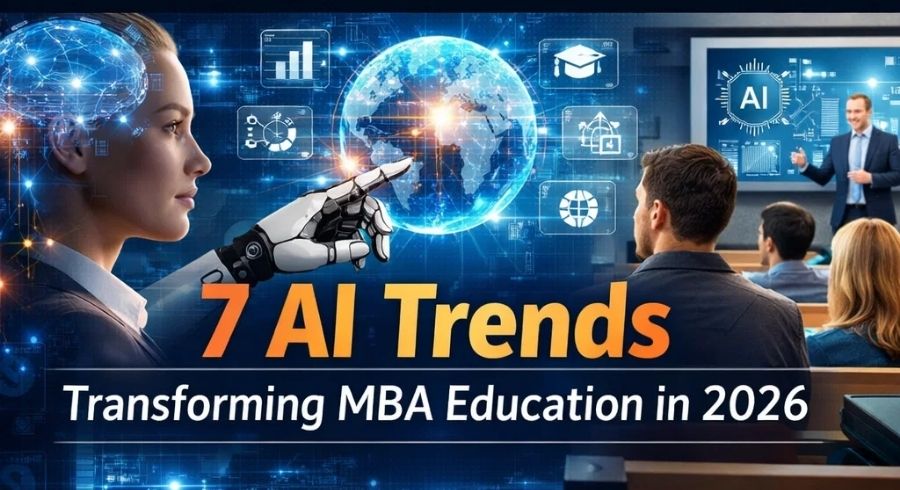
Artificial Intelligence (AI) is no longer a futuristic concept; it’s actively reshaping business education. Management institutes like Jaipuria Institute of Management are using Artificial Intelligence (AI) to redefine learning experiences, from curriculum design to classroom delivery and student engagement.
The shift happening in 2026 goes beyond adopting new tools. It’s about fundamentally rethinking how we prepare future business leaders for a digital-first world.
Smart Classrooms: The Rise of AI-Powered Learning Spaces
AI-enabled classrooms are revolutionising faculty-student interaction. These smart learning spaces use technology to:
- Analyse student behaviour and performance in real-time
- Customise lesson delivery through adaptive content
- Automate attendance and assessments
- Facilitate multilingual and accessible learning
Jaipuria campuses are leading this change. The institute has adopted AI-based platforms that help educators track learning outcomes, monitor student engagement, and assess emotional well-being. This enables timely interventions and personalised academic support when students need it most.
Apply Now for MBA^/PGDM
Personalised Learning: Adaptive Content Delivery
Personalised content delivery is transforming how students learn. AI-integrated Learning Management Systems (LMS) can:
- Identify each student’s unique learning style and pace
- Suggest supplementary materials based on performance gaps
- Accelerate knowledge acquisition in challenging areas
For PGDM students, this is game-changing. Complex subjects like data analytics, marketing strategy, and financial modelling become more accessible when content adapts to individual needs.
AI in Curriculum Development
Curriculum design is becoming more responsive to industry demands. Artificial Intelligence (AI) analyses job market trends and recruiter requirements to recommend:
- Emerging courses like Artificial Intelligence (AI) ethics, generative AI for business, fintech, and digital leadership
- Real-time industry case studies for classroom discussion
- Relevant certifications and micro-credentials that boost employability
Jaipuria Institute of Management has initiated AI-backed curriculum research. The goal is clear: ensure students graduate with skills the market actually needs.
MBA with Artificial Intelligence (AI)
Virtual Teaching Assistants & Chatbots
AI-powered chatbots are now essential support systems for both faculty and administration. These virtual assistants:
- Answer frequently asked questions about classes, schedules, and submissions
- Streamline form-filling and exam processes
- Send automated reminders to keep students on track
- Help faculty manage session scheduling and feedback collection
Hybrid learning models benefit most from this technology. Executive MBA programs and online certifications rely heavily on virtual assistants to maintain seamless communication.
AI-Driven Career Services
Career development has seen the most visible transformation. Artificial Intelligence (AI) tools now power multiple aspects of placement preparation:
- Resume builders that use natural language processing to optimise content
- Interview coaches who analyse facial expressions and body language
- Predictive analytics that match students with compatible recruiters
- Career path simulations based on personality assessments and academic performance
Jaipuria’s placement teams have integrated these tools into their career readiness programs. The result? PGDM students enter the job market better prepared and more confident.
Best MBA Colleges in Delhi NCR
AI for Faculty Development & Research
Faculty members are also benefiting from Artificial Intelligence (AI) integration:
- Advanced plagiarism and originality checkers ensure academic integrity
- Automated literature reviews accelerate research processes
- AI-powered engines suggest relevant research topics
- Academic analytics help refine teaching strategies based on student data
Jaipuria recognises that empowered faculty create better learning outcomes. The institute has launched training programs to help educators leverage AI tools for enhanced teaching and publishing success.
Challenges and Ethical Concerns
The promise of Artificial Intelligence (AI) is enormous, but challenges remain. Institutions must address:
- Data privacy concerns and surveillance in learning environments
- The risk of over-reliance on automation diminishes critical thinking skills
- Ethical dilemmas surrounding automated grading and behavioural profiling
Jaipuria Institute of Management approaches these concerns seriously. AI ethics and responsible technology use are embedded in the institution’s foundational values, ensuring technology serves education rather than compromising it.
MBA Entrance Exams
The Road Ahead
The future of business education is closely connected to artificial intelligence. Students benefit from smarter, more personalized learning experiences tailored to their needs. Faculty members gain access to advanced tools that strengthen both teaching effectiveness and research capabilities. At an institutional level, embracing Artificial Intelligence (AI) demonstrates a clear commitment to innovation, agility, and academic excellence.
At Jaipuria Institute of Management, AI integration isn’t just following a trend; it’s a strategic commitment to building better leaders for tomorrow’s digital economy.
The transformation is happening now. Business schools that embrace AI thoughtfully will define the next generation of management education.
Apply Now for MBA^/PGDM
FAQs: AI in Business Education
- How is AI transforming business education in 2026?
AI is revolutionising business education through smart classrooms, personalised learning, adaptive curricula, virtual teaching assistants, and AI-driven career services that prepare students for the digital economy. - What are smart classrooms in MBA programs?
Smart classrooms use AI to analyse student performance in real-time, customise content delivery, automate assessments, and facilitate accessible, multilingual learning experiences. - How does personalised learning work in PGDM programs?
AI-powered Learning Management Systems identify each student’s learning style and pace, suggest supplementary materials, and help bridge knowledge gaps in complex subjects like data analytics and financial modelling. - Does Jaipuria Institute of Management use AI in education?
Yes, Jaipuria actively integrates AI-based platforms for tracking learning outcomes, student engagement, curriculum development, and career services across its campuses. - What is adaptive content delivery?
Adaptive content delivery uses AI algorithms to customise educational materials based on individual student performance, learning preferences, and comprehension levels. - How does AI help with curriculum development?
AI analyses job market trends and recruiter demands to suggest new courses, real-time industry cases, and relevant certifications that improve student employability. - What are virtual teaching assistants in business schools?
Virtual teaching assistants are AI-powered chatbots that answer student queries, manage schedules, send reminders, and support faculty with administrative tasks. - Can AI help with MBA placements and career services?
Yes, AI tools offer resume optimisation, interview coaching with body language analysis, predictive analytics for recruiter matching, and career path simulations. - How does AI benefit faculty in business schools?
Faculty benefit from AI through plagiarism checkers, automated literature reviews, research topic suggestions, and academic analytics to improve teaching strategies. - What are the ethical concerns with AI in education?
Key concerns include data privacy, surveillance issues, over-reliance on automation affecting critical thinking, and ethical dilemmas in automated grading and behavioural profiling. - Is AI replacing teachers in MBA programs?
No, AI complements teachers by automating administrative tasks and providing insights, allowing faculty to focus more on mentorship, critical thinking development, and personalised guidance. - What AI tools are used for student assessments?
AI tools include automated grading systems, real-time performance analytics, adaptive testing platforms, and behavioural analysis software for comprehensive evaluation. - How does AI improve student engagement?
AI improves engagement through interactive learning platforms, gamification, real-time feedback, personalised content recommendations, and emotional well-being monitoring. - What future skills do AI-integrated MBA programs focus on?
Programs emphasise AI ethics, digital leadership, fintech, data analytics, automation management, and emerging technology integration for business applications. - How can students prepare for AI-driven business education?
Students should develop digital literacy, embrace adaptive learning tools, engage with AI-powered platforms, focus on critical thinking, and understand AI ethics and applications in business.
- How is AI transforming business education in 2026?
Trending AI-based Knowledge Sharing Videos of Jaipuria Institute of Management

Tags
AI ethicsAI in educationAI learning toolsAI toolsAI-backed curriculumAI-based MBAAI-Integrated InstituteAI-Native Business SchoolAI-powered chatbotsAI-powered learningand digital leadershipartificial intelligence in MBAautomation managementbusiness school innovationdata analyticsdigital leadershipedtech trendsemerging technology integrationFinTechgenerative AI for businessJaipuria AIJaipuria business educationJaipuria Institute of ManagementMBA at JaipuriaMBA with artificial intelligencePGDM with AIsmart classrooms