 Skip to the content




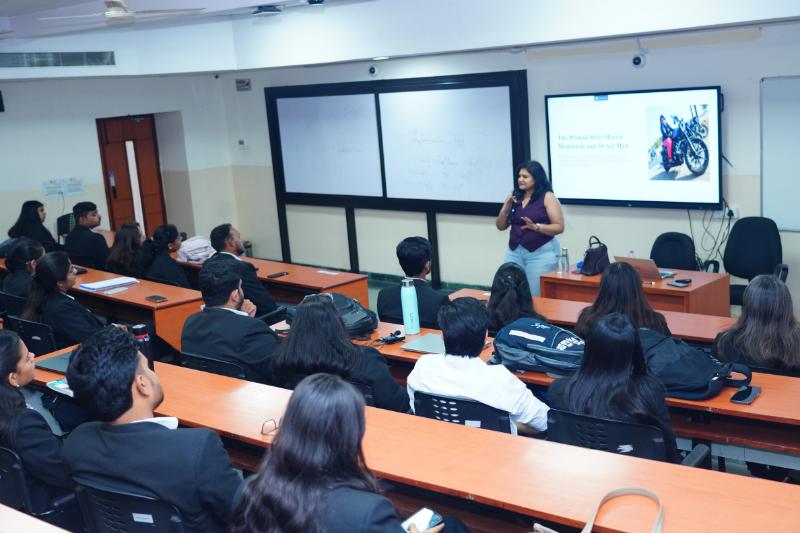
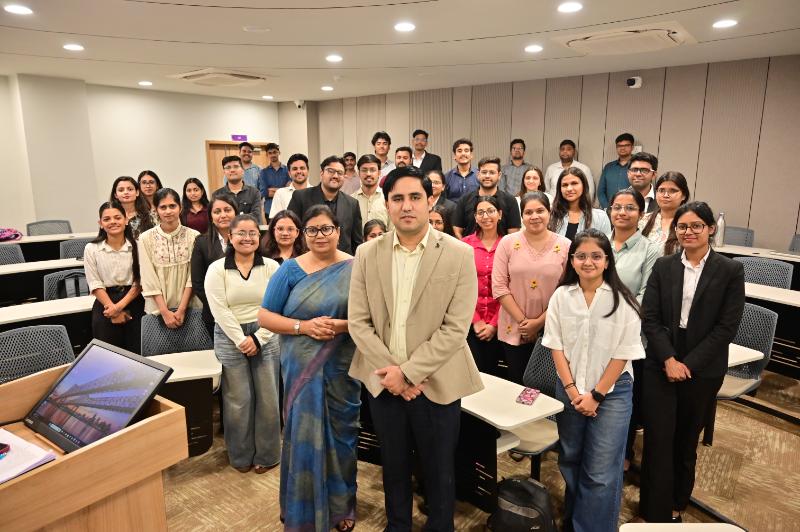
On 6 April 2026, Jaipuria Institute of Management, Jaipur conducted the 10th and final Leadership Lab Session for the current academic year at its Jaipur campus. The session offered an engaging and insightful exploration of entrepreneurial resilience through the inspiring journey of Parul Agrawal.
The case titled “The Woman Who Moved Mountains and Styled Men” was taught by Dr. Tina Jain. It enabled students to gain a deeper understanding of navigating challenges across diverse industries—from the male-dominated stone mining sector to building a contemporary fashion brand rooted in traditional Sanganeri prints.
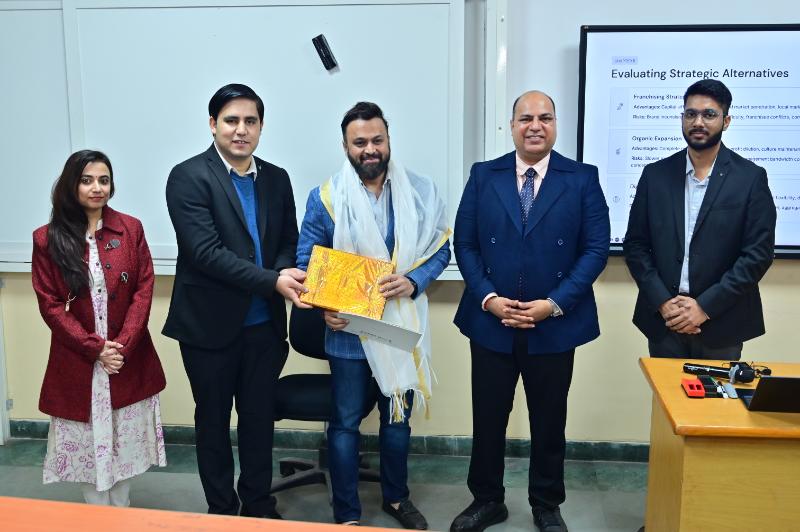
A key highlight of the session was the presence of Parul Agrawal herself, whose interaction added immense value to the discussion. Students had the unique opportunity to engage directly with her and learn from her real-life experiences, challenges, and entrepreneurial journey.
The session encouraged students to reflect on critical leadership decisions, such as balancing stability with risk and making strategic choices between scaling an existing business and building a new brand identity. These discussions fostered deeper insights into resilience, adaptability, and long-term vision in leadership.
The institute extended its gratitude to Dr. Daneshwar Sharma, Director, Jaipur campus, for his vision and motivation behind the initiative of introducing 10 case studies (5 new and 5 existing) under the Leadership Lab framework. The case was co-authored by Dr. Daneshwar Sharma and Dr. Tina Jain, whose efforts contributed significantly to the richness of the session.
The session concluded on a high note, marking a fitting end to the Leadership Lab journey for the academic year. It successfully encapsulated the essence of experiential learning by blending academic rigor with real-world insights, reinforcing Jaipuria Institute of Management, Jaipur’s commitment to developing resilient and future-ready leaders.
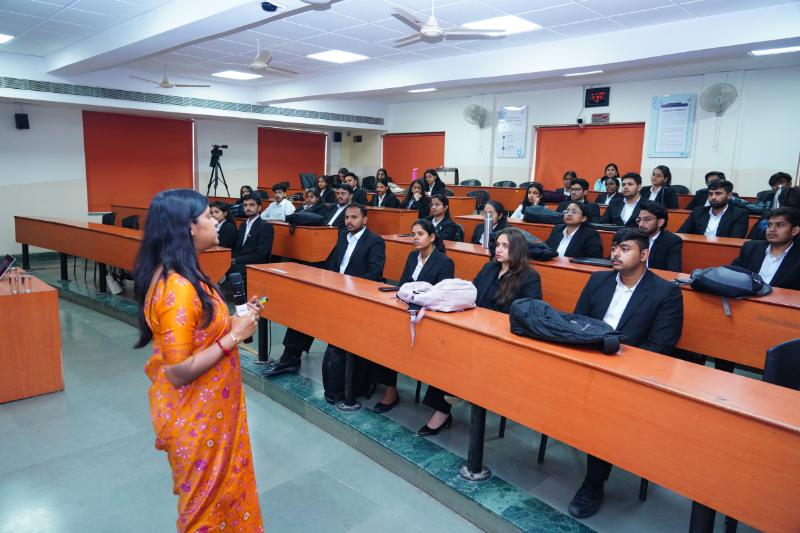
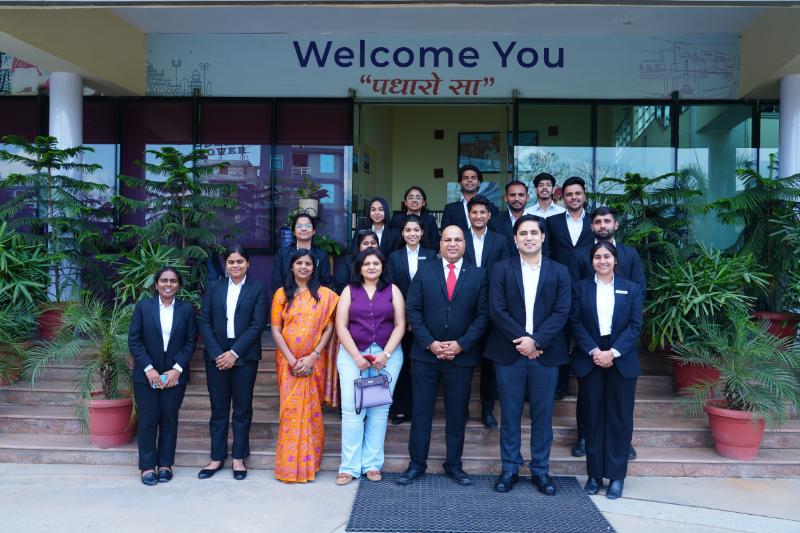

On 30 March 2026, Jaipuria Institute of Management, Jaipur conducted another engaging Leadership Lab Session at its Jaipur campus. The session offered students an immersive learning experience through the case study “Dosaka: Leadership and Growth through the AMO Lens,” written by Dr. Anvay Bhargava (Associate Professor – HR & OB and Chair, Alumni Relations & Media Relations).
The session commenced with a welcome address by Dr. Varun Chotia, Dean – Academics, who emphasized the importance of experiential learning and encouraged students to actively engage in practical, case-based discussions.
The session encouraged students to reflect on key takeaways and apply them to real-world problem-solving scenarios. A significant aspect of the discussion was centered around the Ability–Motivation–Opportunity Framework, which helped students understand how leadership effectiveness can be enhanced through the right balance of skills, motivation, and opportunities within an organization.
The experience was further enriched by the presence of Yugansh Sharma, Founder of Dosaka, who shared valuable insights from his entrepreneurial journey. His perspectives on building and nurturing a brand provided students with practical exposure to the challenges and strategic decisions involved in growing a venture.
The session concluded on an insightful note, with the presence and continued support of Dr. Varun Chotia, reinforcing Jaipuria Institute of Management, Jaipur’s commitment to experiential learning and developing future-ready leaders equipped with both strategic thinking and practical understanding.
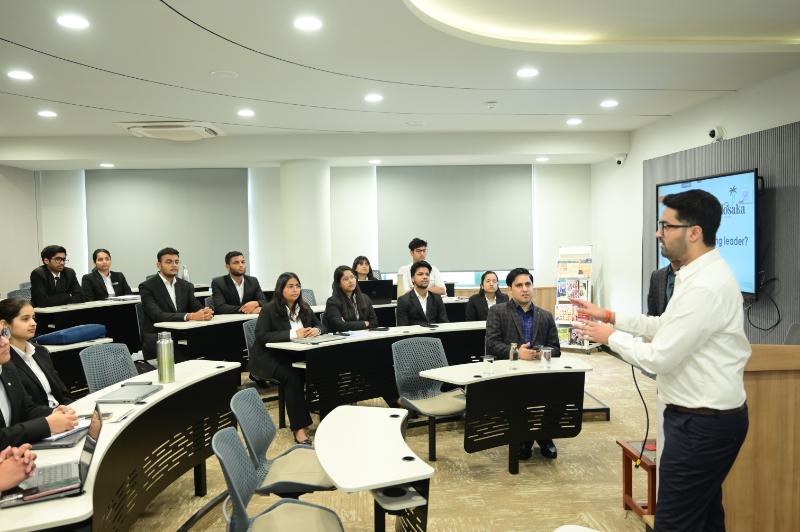
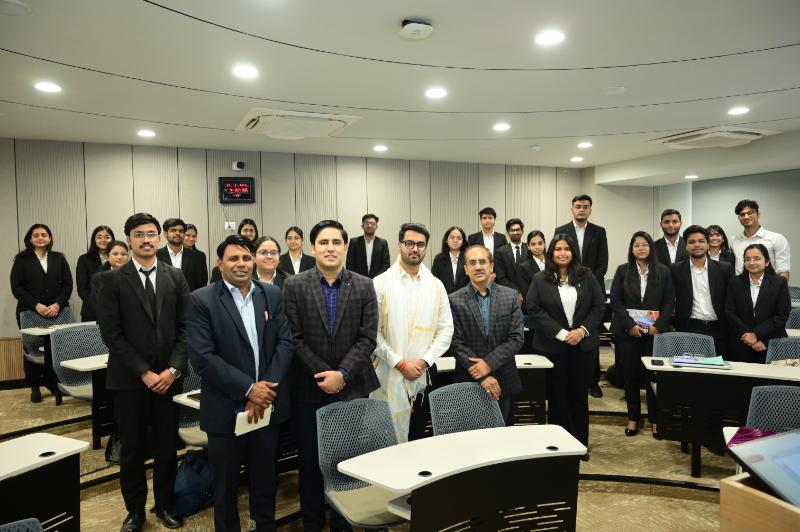
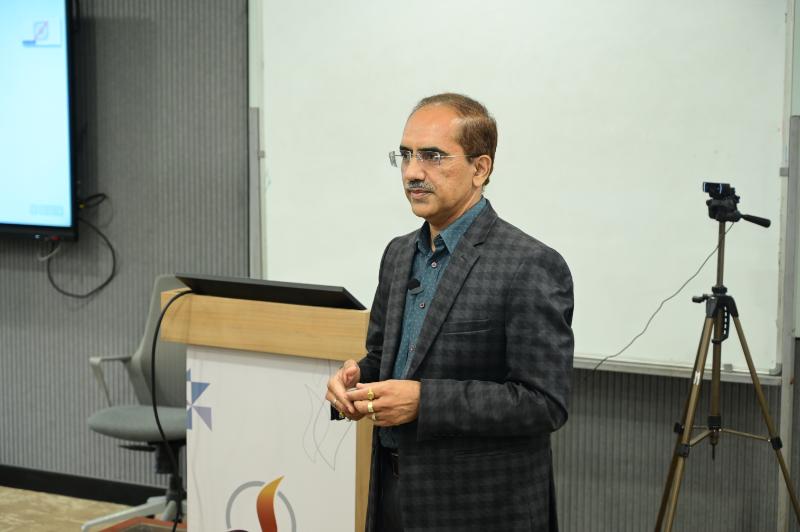

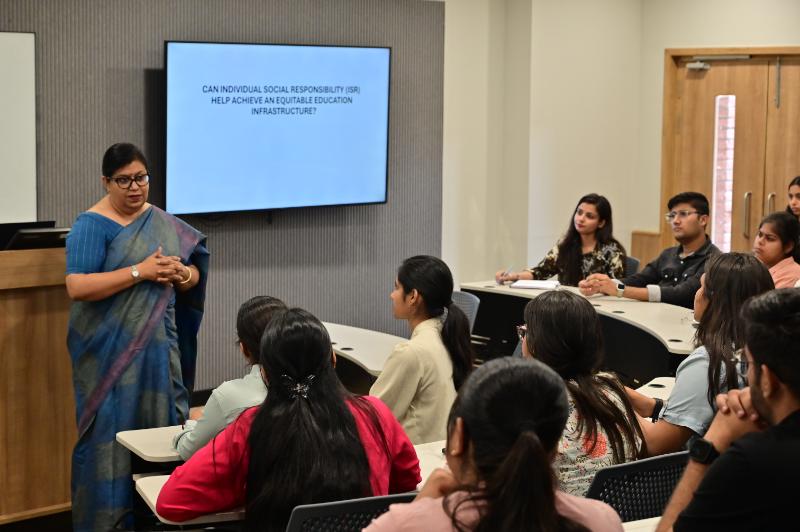
On 20 March 2026, Jaipuria Institute of Management, Jaipur conducted an insightful Leadership Lab Session at its Jaipur campus. The session revolved around the thought-provoking case study “Can Individual Social Responsibility (ISR) Help Achieve an Equitable Education Infrastructure?”
The session commenced with a welcome address by Dr. Varun Chotia, Dean – Academics, who emphasized the importance of socially responsible leadership and encouraged students to actively engage in discussions that go beyond conventional business thinking.
The case was written and taught by Dr. Swati Soni, who facilitated an engaging and reflective discussion among students. The session highlighted the concept of Individual Social Responsibility (ISR) and its potential role in addressing disparities in education infrastructure, encouraging students to think beyond traditional business frameworks.
A key aspect of the discussion included real-life challenges and impactful initiatives such as Edjustice, the institute’s partner NGO under the Social Internship – WISH Program. These examples provided students with practical insights into how individual efforts and community-driven initiatives can contribute to creating a more equitable and inclusive education system.
The session fostered meaningful dialogue, critical thinking, and reflection on leadership, social impact, and responsibility. Students actively engaged in discussions around how future leaders can integrate social consciousness into decision-making and drive sustainable change.
The session concluded on an inspiring note, with the presence and continued support of Dr. Varun Chotia, reinforcing Jaipuria Institute of Management, Jaipur’s commitment to nurturing socially responsible and ethically aware leaders.
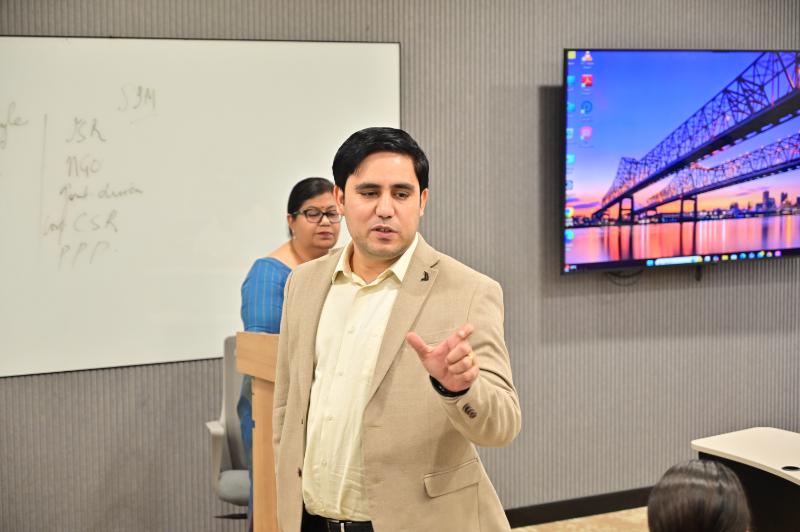

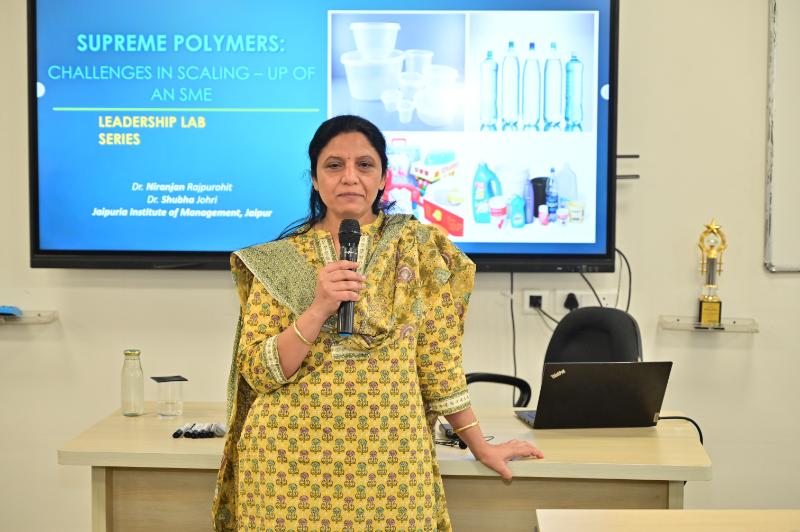
On 17 March 2026, Jaipuria Institute of Management, Jaipur conducted another engaging session under the Leadership Lab initiative. The session revolved around the case study “Supreme Polymers: Challenges in Scaling Up an SME,” offering an insightful exploration into the journey of Supreme Polymers, one of India’s leading packaging solution providers.
The session was conducted by Dr. Shubha Johri, who provided a comprehensive understanding of the company’s growth trajectory, operational strategies, and manufacturing processes. The discussion enabled students to bridge the gap between theoretical concepts and real-world business practices, particularly in the context of small and medium enterprise (SME) scaling.
A key highlight of the session was the engaging interaction with Achal Jain, who shared his entrepreneurial journey along with valuable industry insights. His perspective on navigating business challenges, sustaining growth, and adapting to evolving market dynamics added significant depth to the learning experience and inspired students to think strategically.
The session was graced by the presence of Dr. Daneshwar Sharma, Director-In-Charge, and Dr. Varun Chotia, Dean – Academics, whose continued support for such experiential learning initiatives strengthens the institute’s commitment to academic excellence.
The session concluded as a perfect blend of academic learning and industry exposure, equipping students with practical insights into the challenges and opportunities involved in scaling an SME while fostering strategic and leadership thinking.
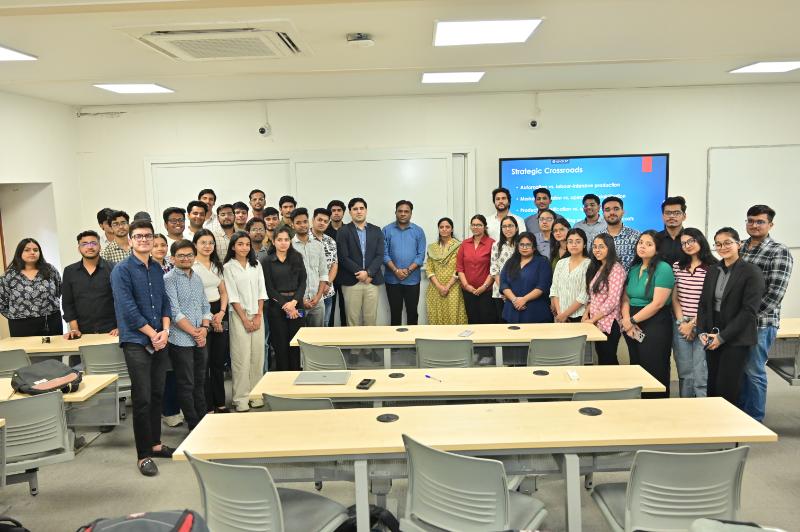
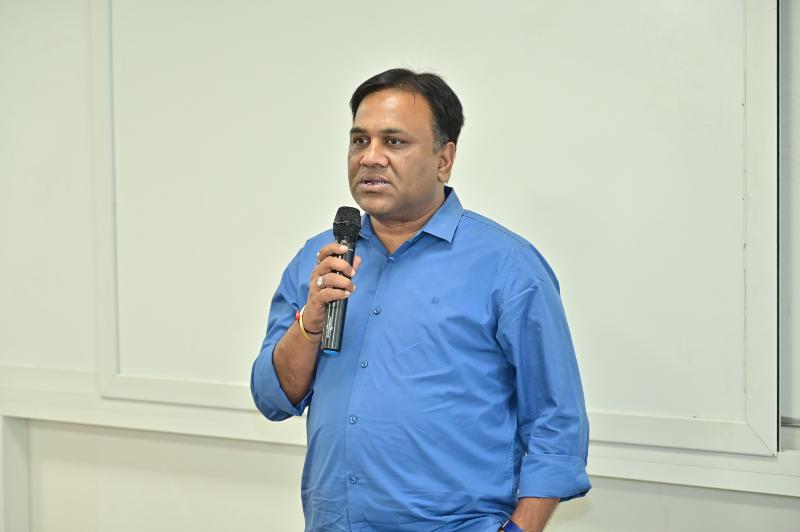

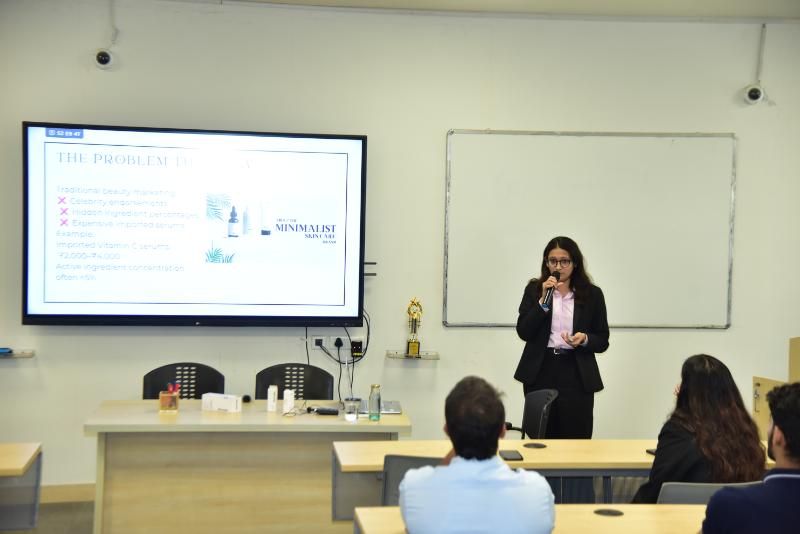
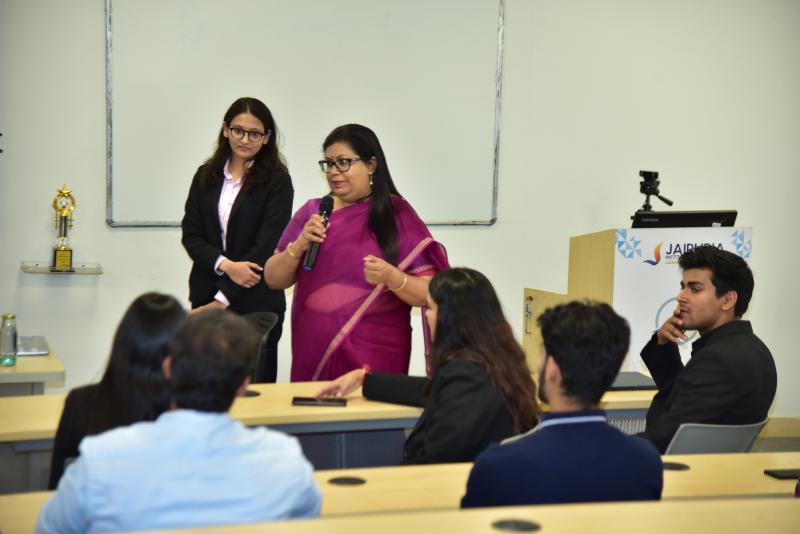
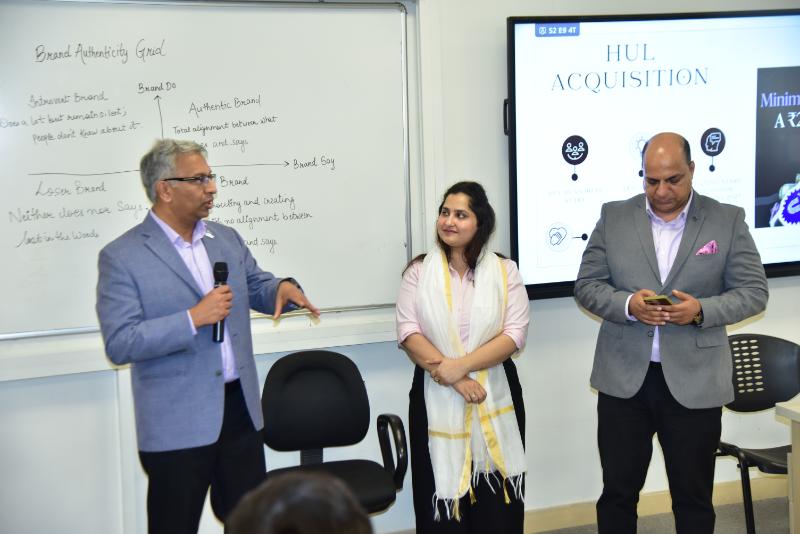
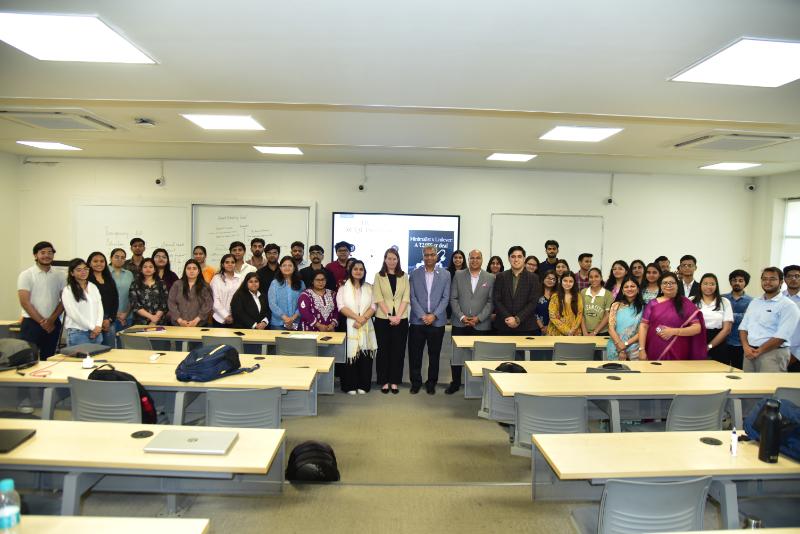
On 13 March 2026, Jaipuria Institute of Management, Jaipur hosted a special Leadership Lab Session for the PGDM Batch 2025–27. The session revolved around the case study titled “The Minimalist Dilemma: Authenticity in the Age of Corporate Scale,” focusing on the journey and challenges of the skincare brand Minimalist. The case was presented by Ayushi Mathur (Batch 2025–27), bringing a fresh student-led perspective to the discussion.
The session commenced with introductory remarks by Dr. Varun Chotia, Dean – Academics, who highlighted the importance of experiential learning and encouraged students to actively participate in such practical, case-based engagements. The discussion incorporated role-play and interactive activities, enabling participants to understand the complexities of leadership, decision-making, and brand authenticity in a rapidly scaling organization.
A key highlight of the session was the presence of Ms. Bhawana Trehan, Team Leader at Minimalist, who enriched the discussion by sharing valuable insights from her professional journey. Her experiences provided students with a real-world perspective on managing growth while maintaining brand integrity and customer trust in a competitive skincare market.
The event was further honored by the presence of Dr. Daneshwar Sharma, Director-In-Charge, along with distinguished dignitaries including Prof. J. K. Aier, Senior Associate Dean for Academic Affairs and Global Engagement at Costello College of Business, George Mason University, and Prof. Danielle Swanneol, Executive Director – International Relations and Strategic Initiatives at George Mason University. Their presence added significant academic and global perspective to the session.
The institute also acknowledged the visionary initiative of Dr. Daneshwar Sharma in introducing the concept of developing one case study annually under the Leadership Lab framework. Special appreciation was extended to Dr. Swati Soni for her guidance in mentoring students and enhancing the quality of the case. Prof. J. K. Aier expressed his appreciation and lauded the institute’s efforts in enriching student learning through such innovative and practice-oriented initiatives.
The session concluded on an engaging note, successfully blending academic rigor with practical exposure. It provided students with a deeper understanding of the challenges of scaling a brand while preserving authenticity, equipping them with critical leadership and strategic thinking skills relevant to today’s dynamic business environment.

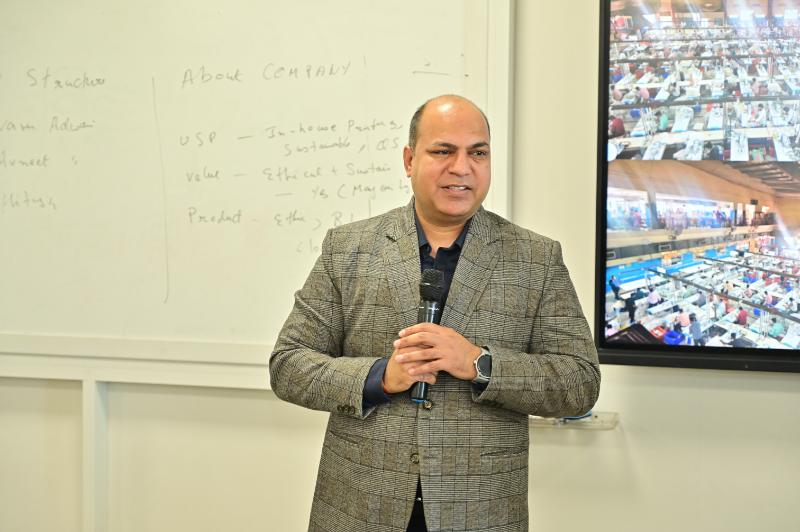
On 26 February 2026, Jaipuria Institute of Management, Jaipur conducted an insightful Leadership Lab Session centered on the thought-provoking case study “Scaling with Integrity: Navin’s Dilemma in the Textile Fabrication Sector.” The session enabled students to explore critical themes such as ethical decision-making, responsible entrepreneurship, and the complexities of scaling a business while maintaining integrity and regulatory compliance in a dynamic market environment.
The session was conducted by Dr. Vartika Varyani, who facilitated engaging discussions and encouraged students to analyze real-world business dilemmas through a values-driven lens. The session fostered active participation, prompting students to reflect on how organizations can balance growth ambitions with ethical responsibilities.
A key highlight of the session was the interaction with the protagonist of the case, Navin Advani, who shared practical perspectives from his entrepreneurial journey. His firsthand insights into the challenges of scaling operations while adhering to ethical standards added depth and authenticity to the discussion, allowing students to connect theoretical concepts with real-world experiences.
The session was graced by the presence of Dr. Daneshwar Sharma, Director-In-Charge, and Dr. Varun Chotia, Dean – Academics, whose continued support for experiential learning initiatives strengthens the institute’s academic ecosystem.
The session concluded on a reflective note, reinforcing Jaipuria Institute of Management, Jaipur’s commitment to nurturing ethically grounded and future-ready leaders. It provided students with valuable insights into navigating complex business scenarios while upholding integrity, responsibility, and long-term vision.
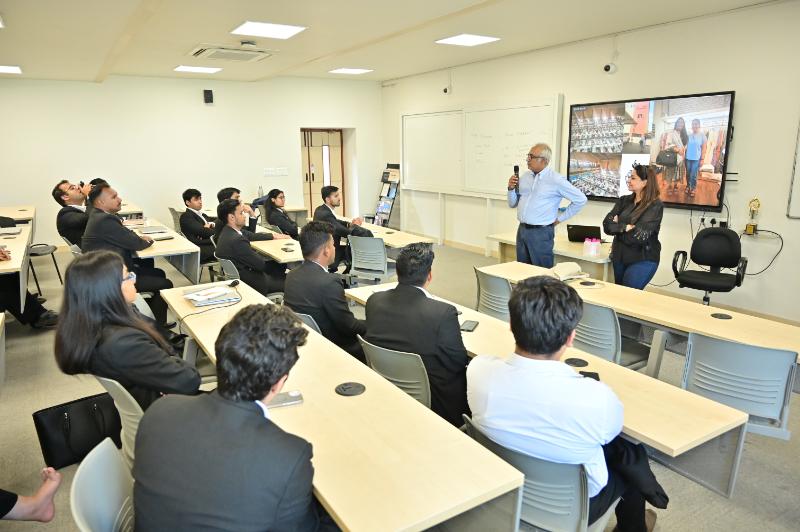
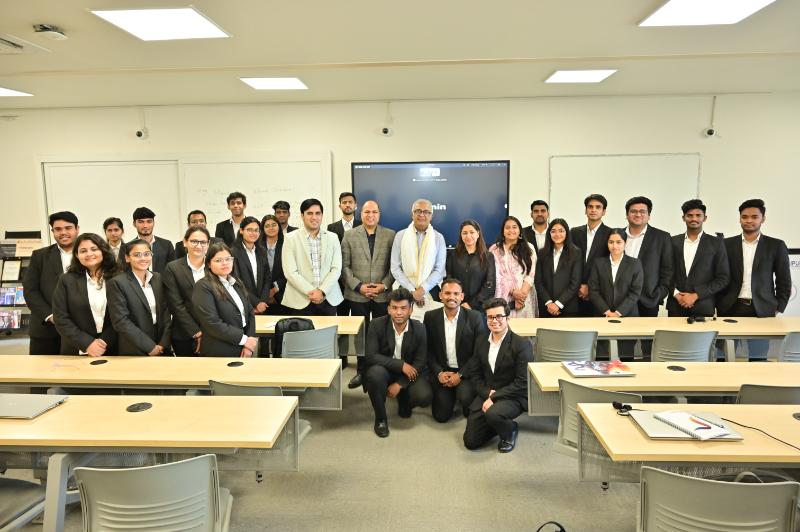

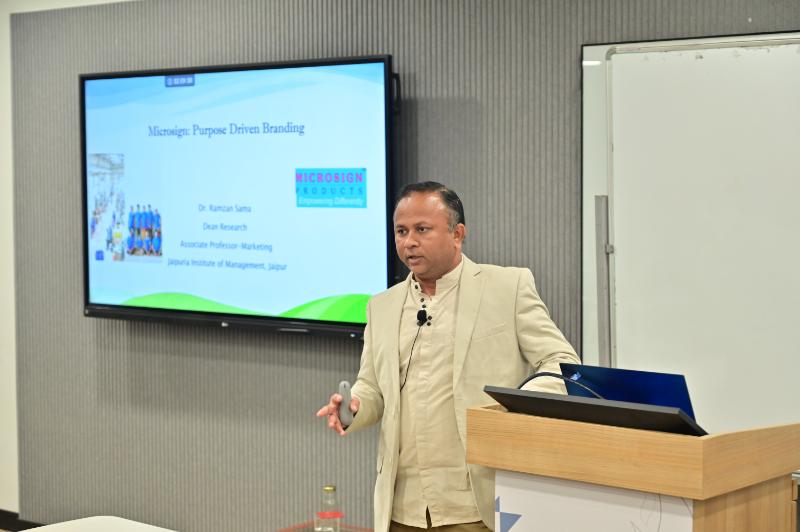
On 25 February 2026, Jaipuria Institute of Management, Jaipur organized an enriching Leadership Lab Session centered on the compelling case study “Microsign Products: Empowering Differently.” The session aimed to provide students with valuable insights into inclusive leadership, purpose-driven strategies, and the transformative impact of empowering differently-abled individuals through sustainable business models.
The session was conducted by Dr. Ramzan Sama, who facilitated engaging discussions and encouraged reflective thinking among students. Through active participation and thoughtful dialogue, students explored how organizations can integrate social responsibility with business objectives, while creating meaningful and lasting impact.
Aligned with the Jaipuria Leadership Lab framework, the session emphasized the importance of leading with empathy, integrity, and a strong sense of purpose. It enabled students to understand how purpose-driven branding not only enhances organizational value but also contributes to inclusive growth and societal development.
The Leadership Lab initiative continues to be guided under the valuable mentorship of Dr. Varun Chotia, Dean – Academics, whose vision for experiential learning plays a pivotal role in strengthening academic excellence and fostering practical understanding among students.
The session concluded on a reflective and inspiring note, reinforcing Jaipuria Institute of Management, Jaipur’s commitment to nurturing conscious, responsible, and future-ready leaders who can drive both business success and social impact.
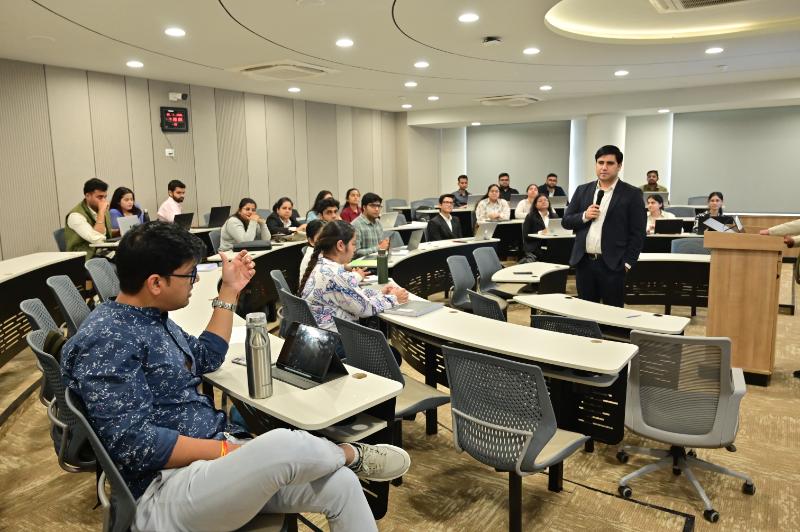
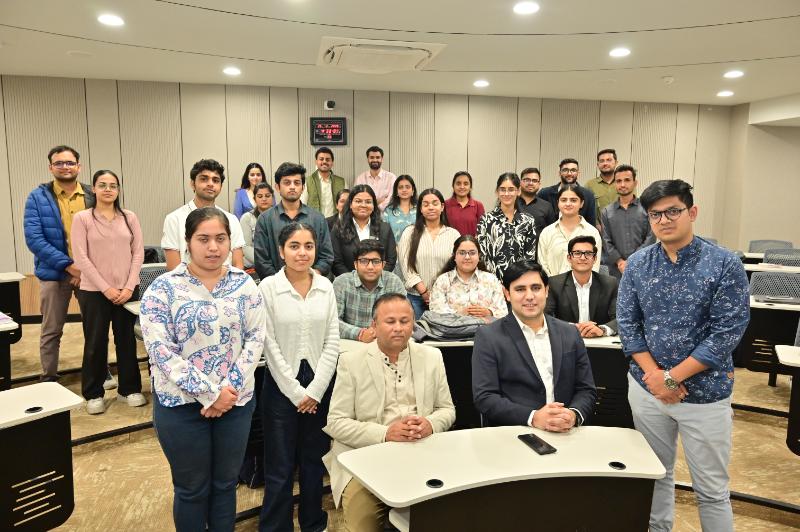

On 12 January 2026, Jaipuria Institute of Management, Jaipur conducted an insightful Leadership Lab Session for the PGDM Batch. The session revolved around the case study titled “Brown Sugar: Strategizing Growth in India’s Tier-2 F&B Market.” The discussion aimed to provide students with a deeper understanding of the evolving dynamics of the food and beverage industry, particularly in emerging urban markets.
The session was graced by Vishal Jalani, Founder & Director of Brown Sugar – The Dessert Café & Bakery Chain, who brought valuable entrepreneurial insights and practical industry exposure to the classroom. Through his interaction, students were able to connect theoretical concepts with real-world business scenarios, gaining a clearer perspective on scaling and sustaining a brand in a competitive F&B landscape.
As the session progressed, students explored key aspects of business growth strategies, operational challenges, and critical decision-making processes involved in expanding a dessert café chain in Tier-2 cities. The discussion encouraged active participation, where students analyzed market positioning, consumer behavior, and the importance of innovation and consistency in the food industry.
A significant highlight of the session was the firsthand account shared by Mr. Jalani, where he elaborated on his entrepreneurial journey, challenges faced during expansion, and the strategic choices that contributed to the brand’s success. His insights provided students with a practical understanding of how businesses adapt to changing market demands while maintaining brand identity.
The session was conducted under the guidance of Dr. Daneshwar Sharma, Director-In-Charge, and Dr. Varun Chotia, Dean – Academics. It was seamlessly coordinated by Dr. Kashish Sharma, Assistant Professor, and Dr. Ansita Aggarwal, Assistant Professor, whose efforts ensured an engaging and enriching learning experience.
The session concluded on a highly impactful note, successfully bridging the gap between academic learning and industry practices. It enabled students to gain practical exposure to real-time business challenges, equipping them with strategic thinking skills essential for navigating the dynamic F&B sector.
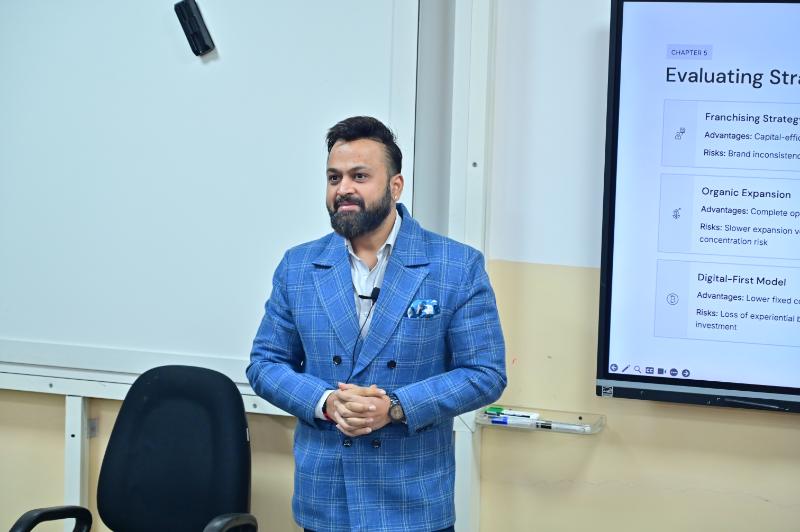
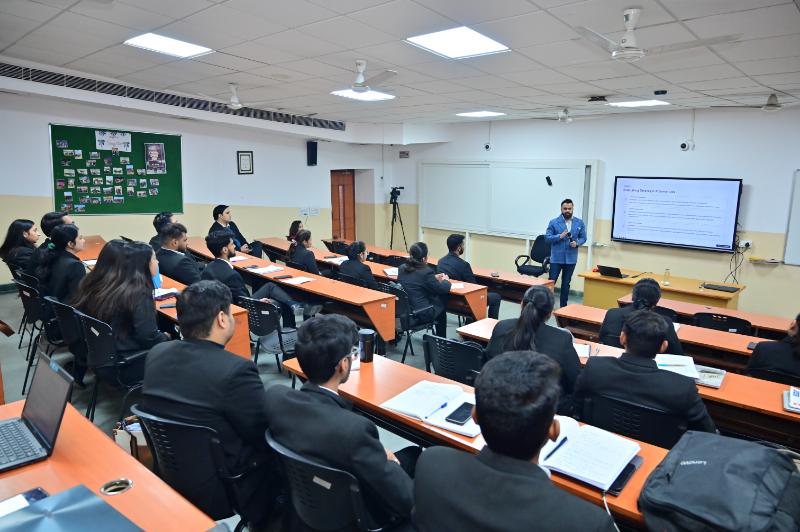

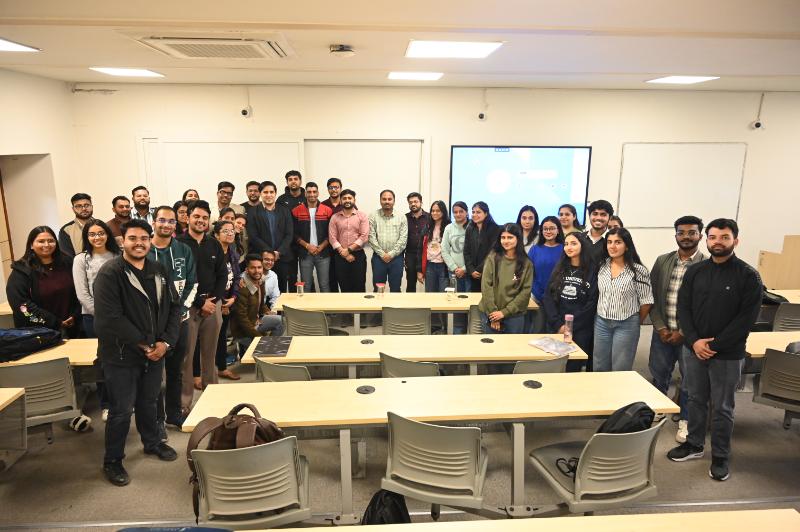
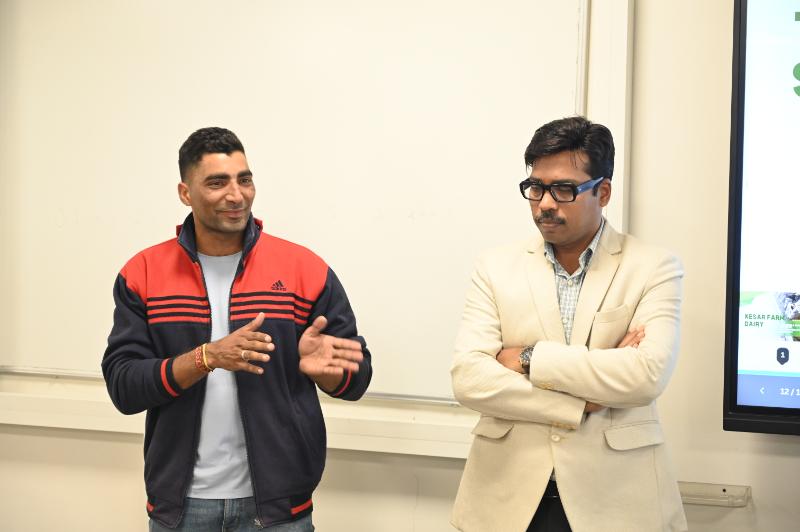
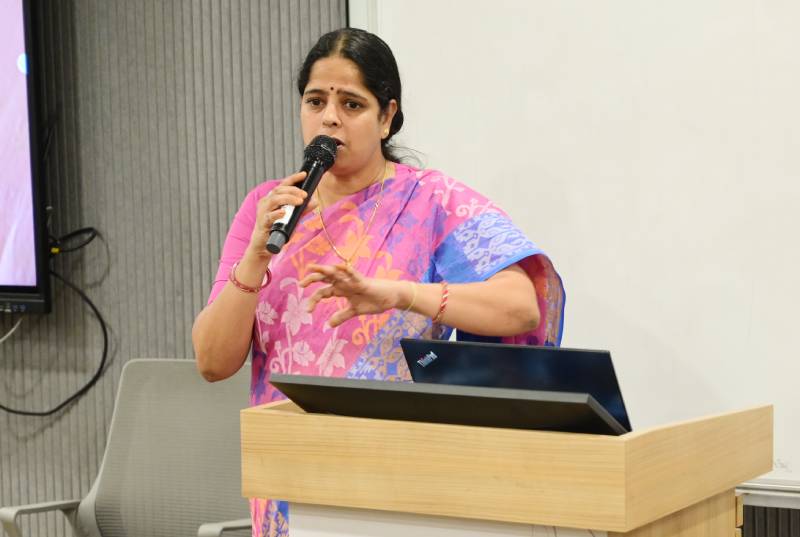
On 12 September 2025, Jaipuria Institute of Management, Jaipur conducted an enriching Leadership Lab Session for the PGDM Batch. The session revolved around the case study titled “Kesar Farm Dairy: Building a Business on Trust, Sustainability and Integrity.” The discussion aimed to provide students with a deeper understanding of value-driven leadership, ethical entrepreneurship, and sustainable business practices.
The session provided valuable insights into authentic leadership and servant leadership, drawing inspiration from Shankar’s journey of building a business rooted in trust, sustainability, and integrity. Through the discussion, students were able to connect theoretical frameworks with real-world applications, gaining a clearer perspective on leading organizations with purpose and responsibility.
As the session progressed, students explored key aspects of leadership, including leading self, leading others, and leading within the enterprise. The discussion encouraged active participation, enabling students to reflect on the importance of ethics, sustainability, and long-term vision in building resilient organizations.
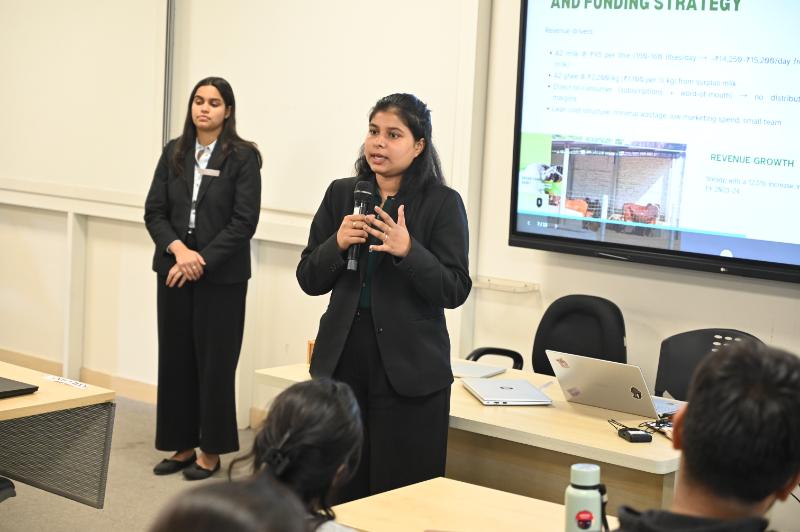
A significant highlight of the session was the engaging case discussion led by Dr. Rajesh Sinha, along with second-year students Aliza Abdin and Aashi Mishra. Their contributions added depth to the analysis and enriched the overall learning experience. The presence and support of Dr. Sameer Mittal, Dr. Arun Singh Rana, and Dr. Ankit Singh further enhanced the session, making it insightful and impactful.
The session was conducted under the guidance of Dr. Daneshwar Sharma, Director-In-Charge, and Dr. Varun Chotia, Dean – Academics. It aligned with the Jaipuria Leadership Lab framework, fostering a comprehensive understanding of purposeful leadership.
The session concluded on a highly impactful note, successfully reinforcing the importance of integrity, sustainability, and ethical decision-making. It enabled students to gain practical exposure to leadership challenges, equipping them with the mindset and skills required to become responsible and future-ready leaders.