



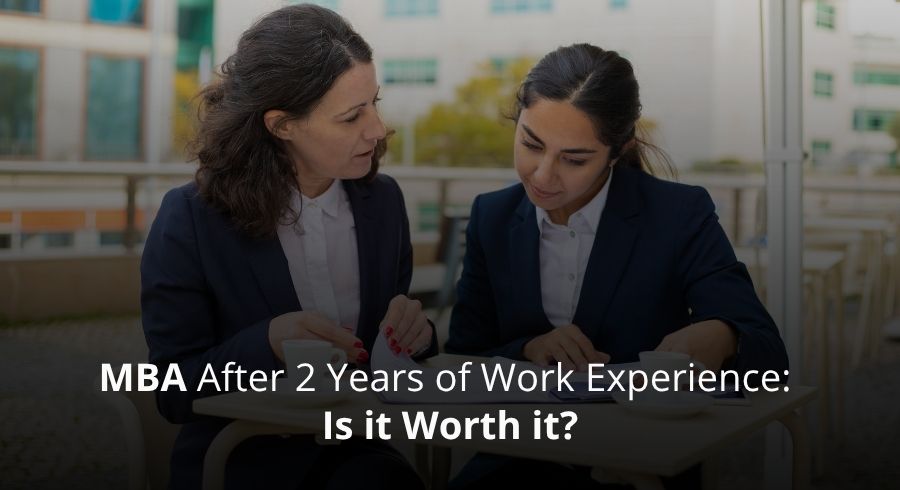
This guide explains whether pursuing an MBA after two years of work experience is a good decision. Explore salary growth, career transition opportunities, industry demand and ROI analysis to determine the ideal time to pursue management education.
MBA After 2 Years of Work Experience: Is It Worth It?
Published: April 6, 2026,
12:46 pm
| Updated: April 6, 2026
Many young professionals begin their careers immediately after completing their undergraduate degrees. After gaining a few years of professional exposure, they often consider pursuing an MBA to accelerate their career growth.
One of the most common questions professionals ask is whether two years of work experience is the right time to pursue an MBA. In many cases, two years of industry exposure provides the right balance between practical knowledge and academic readiness.
Institutions such as Jaipuria Institute of Management, with campuses in Lucknow, Noida, Jaipur, and Indore, encourage candidates with work experience because they bring real-world perspectives and enrich classroom discussions.
Why Work Experience Before MBA Matters
Work experience provides practical understanding of business operations, team dynamics and industry challenges. Professionals who pursue MBA after gaining work experience often benefit from:
- better understanding of business concepts
- improved classroom participation
- stronger leadership potential
- higher salary prospects
Apply Now for MBA^/PGDM
Students with experience are also more likely to pursue specialised roles in consulting, analytics, or product management.
Career Benefits of an MBA After Work Experience
1. Career Transition Opportunities
Many professionals pursue MBA to switch industries or job roles.
Common transitions include:
- Engineering → Consulting
- Sales → Marketing Strategy
- Finance Executive → Investment Banking
- IT Developer → Product Management
An MBA provides the managerial knowledge required to transition into these roles.
2. Higher Salary Potential
Candidates with work experience often receive higher salary offers after an MBA compared to fresh graduates.
Typical salary comparison:
| Fresh Graduate MBA Salary | ₹8–12 LPA |
| MBA with Work Experience | ₹12–18 LPA |
Consulting and product roles often offer even higher packages. Jaipuria graduates across Lucknow, Noida, Jaipur, and Indore have consistently benefited from strong placement opportunities and salary growth.
3. Leadership Development
MBA programmes emphasise leadership, strategic thinking, and decision-making. Professionals with prior experience can apply classroom learning directly to real-world business scenarios.
Ideal Time to Pursue an MBA
The ideal time to pursue an MBA varies depending on career goals.
Typical profile of MBA candidates:
| Age | 23–28 years |
| Work Experience | 1–4 years |
| Educational Background | Engineering, Commerce, Business, or Science |
Two years of experience often provides enough exposure to understand career goals while still being early enough to pivot into management roles.
ROI of MBA After Work Experience
Return on Investment (ROI) improves significantly when candidates have prior experience.
Example scenario:
| Pre-MBA Salary | ₹5 LPA |
| Post-MBA Salary | ₹14 LPA |
| Salary Increase | ₹9 LPA annually |
| Break-Even Period | Approximately 2 years |
This makes MBA a strong investment for career growth.
Industries Hiring MBA Professionals
Several industries actively recruit MBA graduates with work experience:
| Industry | Typical Roles |
| Consulting | Management Consultant |
| Technology Management | Product Manager |
| Finance & Investment Banking | Financial Analyst |
| Digital Marketing | Digital Marketing Manager |
| Business Analytics | Analytics Consultant |
| Supply Chain Management | Operations Manager |
Jaipuria students in Lucknow, Noida, Jaipur, and Indore gain exposure to these sectors through internships, projects, and industry interactions.
Conclusion
Pursuing an MBA after two years of work experience can be a highly strategic decision. It allows professionals to combine practical knowledge with management education, leading to better career opportunities and higher salary growth.
Gaining initial work experience helps clarify career goals and significantly improves return on investment, making MBA both a smart and timely choice.
Frequently Asked Questions (FAQs)
1. Is an MBA after 2 years of work experience a good idea?
Yes. Two years of experience help professionals understand industry challenges and benefit more from MBA education.
2. Do companies prefer experienced MBA candidates?
Many recruiters prefer candidates with work experience because they bring practical insights and professional maturity.
3. What salary increase can professionals expect after an MBA?
MBA graduates with work experience often receive salaries between ₹12 LPA and ₹18 LPA, depending on specialization.
4. Which industries hire MBA graduates with work experience?
Consulting, finance, product management, analytics, and marketing industries actively recruit such candidates.
5. Is an MBA necessary for career growth?
MBA is not mandatory, but it significantly improves leadership and career progression opportunities.
6. What is the ideal age to pursue an MBA?
Most students pursue an MBA between 23 and 28 years of age.
7. Does work experience improve MBA placements?
Yes. Work experience often improves placement opportunities and salary outcomes.
8. Can professionals change industries through an MBA?
Yes. An MBA helps professionals transition into new industries and managerial roles.
9. Does work experience affect MBA ROI?
Yes. Candidates with work experience often recover their MBA investment faster due to higher salaries.
10. Should engineers pursue an MBA after work experience?
Many engineers pursue an MBA after gaining technical experience to move into management or consulting roles.
Trending AI-based Knowledge Sharing Videos of Jaipuria Institute of Management

Tags
Career transition MBAMBA after work experienceMBA analytics rolesMBA benefitsMBA career growthMBA career switchMBA consulting careersMBA decision guideMBA for engineersMBA industries hiringMBA leadership skillsMBA placement advantageMBA product managementMBA ROI IndiaMBA salary comparisonMBA salary growthMBA timingWork experience before MBA